Tripuri Purnima: the festival of lamps and its significance
Tithi: Kartik Shukla Purnima (also called Tripurari Purnima, Dev Diwali, Kartik Purnima) | Associated with: Tripurari Shiva, Dattatreya, deepdaan The English date changes every year as it follows the lunar calendar.
What is Tripuri Purnima?
About fifteen days after Diwali, the full moon of the month of Kartik rises. This is Kartik Shukla Purnima, known in Maharashtra as Tripuri or Tripurari Purnima. In North India, and especially in Kashi, the same day is Dev Diwali, the Diwali of the gods. Rows of lamps glow in homes, temples and along riverbanks. Among all the full moons of the year, this one is considered the brightest and the most auspicious.
The name comes from Lord Shiva's title Tripurari, the destroyer of Tripura, the three cities.
The story of Tripurasura
The Shiva Purana tells the story in detail. Lord Kartikeya slew the demon Tarakasura. His three sons, Tarakaksha, Kamalaksha and Vidyunmali, performed severe penance, and Brahma appeared before them. They asked for immortality. Brahma said, "Whatever is born must die. Ask for something else."
So they asked cleverly: "Give us three impregnable cities. They will come into a single line only once in a thousand years, and only he who pierces all three with a single arrow at that moment may end us." Brahma granted it. The demon architect Maya built three cities: one of gold in heaven, one of silver in the sky and one of iron on earth. Together they were called Tripura.
At first the brothers lived righteously, but pride in their invincibility grew. They terrorised the three worlds, disrupted the sages' yajnas and drove the gods out of heaven. The gods finally took refuge in Lord Shiva.
According to the Shiva Purana, a divine chariot was prepared. The earth became the chariot, the sun and moon its wheels, Mount Meru the bow and the serpent Vasuki the bowstring. Brahma was the charioteer, Vishnu himself became the arrow, and Agni was its tip. Mahadev drew the bow. The three cities came into line, and at that very moment Shiva released the arrow. All three were burnt to ashes in a single shot. Devotees believe the gods celebrated by lighting lamps. So Shiva became Tripurari, and this day became Tripuri Purnima.
The meaning: three cities within us
The story is also read symbolically. The three cities are not outside us but within: desire, anger and greed, or ego, sloth and ignorance. They seem unbreakable. Yet one moment of the Guru's grace, one arrow of the Divine Name, can burn all three at once. The lamp of Tripuri Purnima is not only to light up the house; it is a resolve to burn away the darkness in the mind.
Why the day matters to Datta devotees
Tripura fell only when Brahma (charioteer), Vishnu (arrow) and Shiva (archer) came together. Dattatreya is exactly that: Brahma, Vishnu and Mahesh united in one form, born as the child of Atri and Anasuya. That is why Datta temples also celebrate Tripuri Purnima with lamps.
Kashi is dear to Datta devotees. It is believed that Dattatreya bathes in the Ganga at Kashi every morning, and on this night lakhs of lamps float on those very ghats.
The Shri Gurucharitra mentions Kartik Purnima too. In chapter 46, the secret that Shri Guru visited seven disciples' homes at the same time during Diwali comes out when, according to tradition, the disciples meet again at Ganagapur on Kartik Purnima. In chapter 48, Shri Guru calls a bath at the Sangam in the month of Kartik especially meritorious.
The next full moon after Tripuri is Margashirsha Purnima, which is Datta Jayanti, preceded by the Gurucharitra Saptah from Margashirsha Shukla Saptami. So the Tripuri lamp opens a month of Datta worship.
Other traditions
- Dev Diwali: the festival of lamps on the ghats of the Ganga at Kashi.
- Tulsi Vivah: the Tulsi marriage season that begins on Kartiki Ekadashi ends on this day.
- Matsya avatar: some traditions hold that Lord Vishnu took the Matsya (fish) avatar on this tithi.
- Kartikeya darshan: in Maharashtra, darshan of Kartik Swami during the Krittika nakshatra on this day is considered especially auspicious.
- Guru Nanak Jayanti: Sikhs celebrate Gurpurab on the same day.
What to do on this day
By tradition, the following are done on Tripuri Purnima. Even if you cannot do them all, lighting one lamp with devotion is the heart of the day.
- Early bath (Kartik snan): bathe before sunrise, in a river or tirtha if possible, or at home with a little Ganga water added.
- Deepdaan: in the evening, light lamps in the house, courtyard, near the tulsi and at the temple. Floating lamps on a river is also a custom.
- Light the Tripur: temples in Maharashtra light the Tripur, a many-wicked lamp pillar, a deepmal or a row of lamps in the sanctum. Each wick is a prayer.
- Shiva puja: abhishek, offering of bel leaves and chanting "Om Namah Shivaya".
- Datta darshan and naam-smaran: visit a Datta temple, light a lamp at Datta's feet and chant "Digambara Digambara Shripad Vallabh Digambara" or "Shri Gurudev Datta".
- Daan: donate food, lamps or clothes, or help someone in need. Charity on this day is considered especially meritorious.
- Tulsi puja: light a lamp before the tulsi plant and worship it.
- Fast or Satyanarayan puja: many families fast or perform Satyanarayan puja.
- Sankalp: like the three cities in the story, resolve to give up one fault in yourself, such as anger, sloth or greed.
Deepotsav at the Ekmukhi Datta Mandir
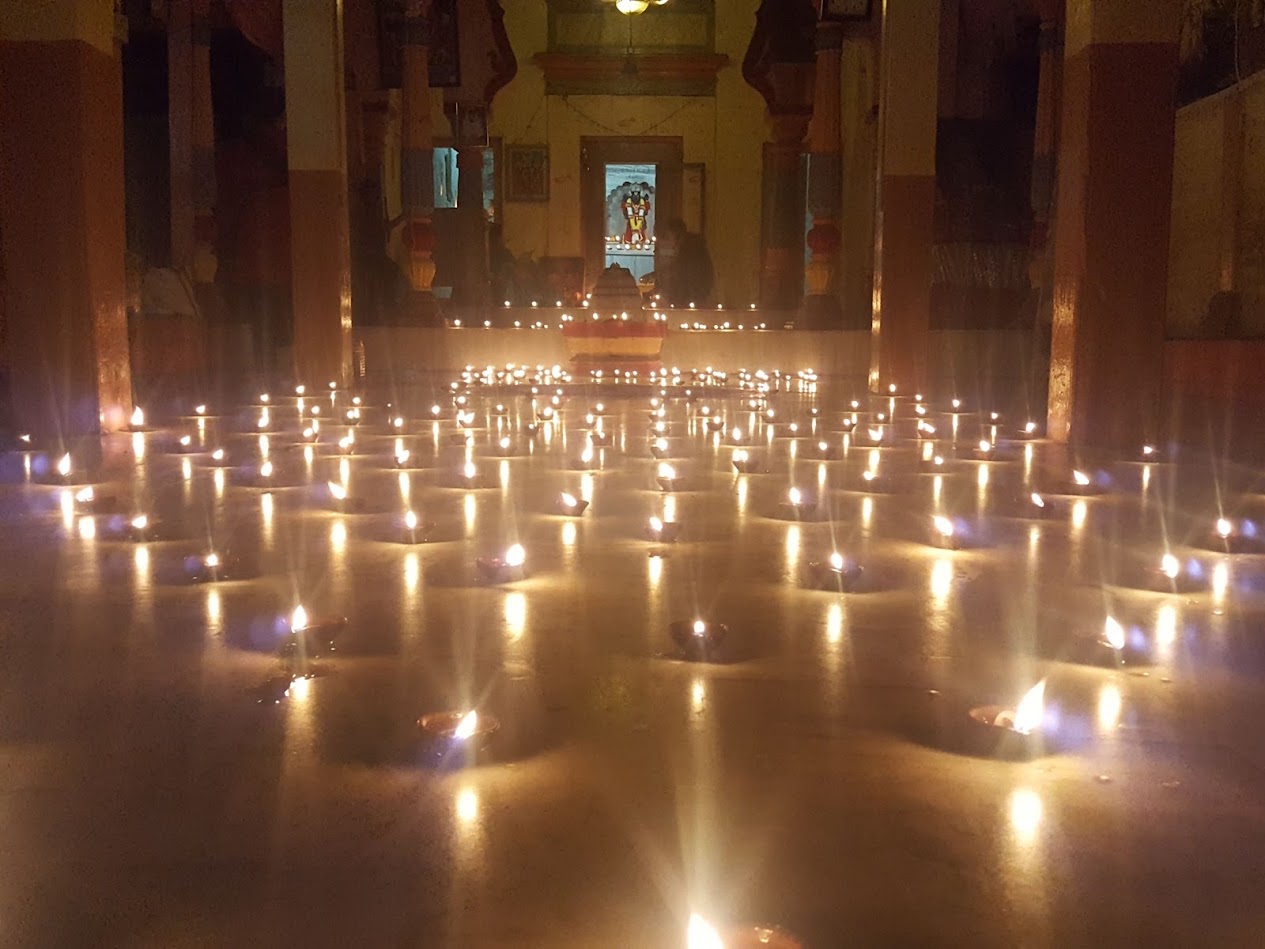
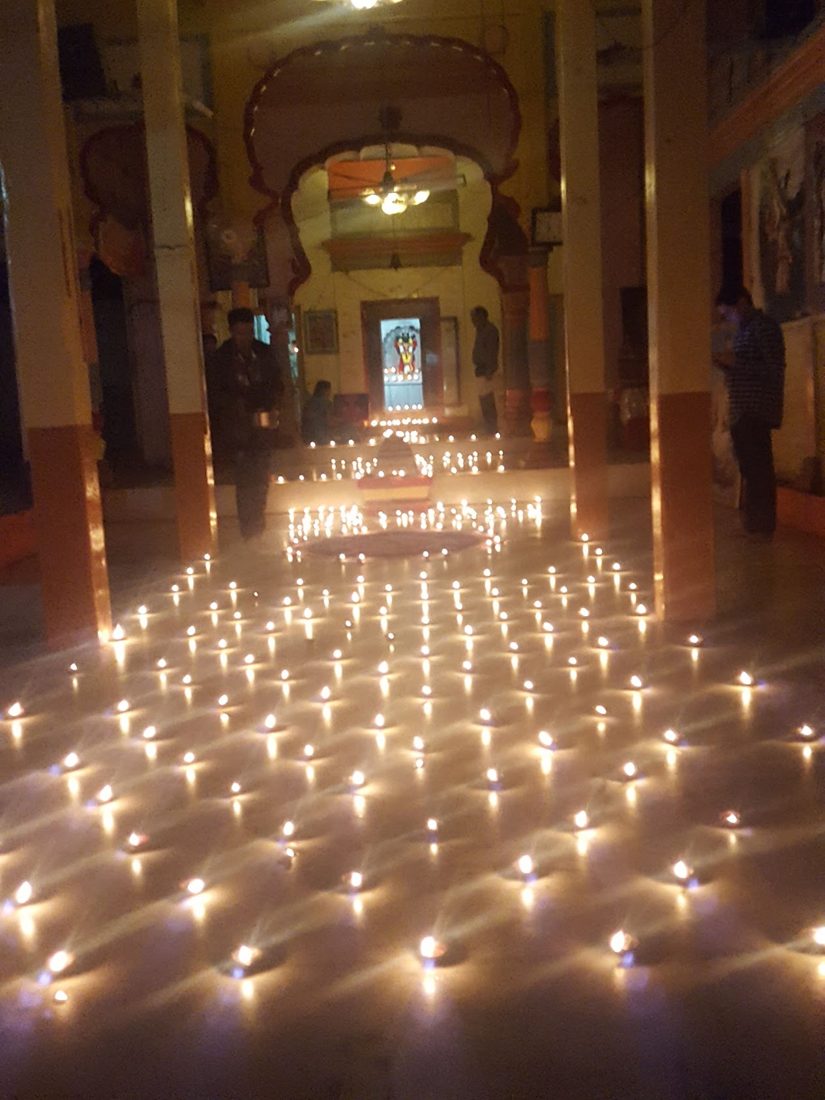
On Tripuri Purnima the hall of the Shri Ekmukhi Datta Mandir, Dange Galli, Manik Chowk, Ahilyanagar, glows with lamps: rows of diyas from the sanctum to the hall, the soft light of samai lamps before the rare single-faced Datta murti, and the chanting of Datta's name. It is a sight worth experiencing at least once.
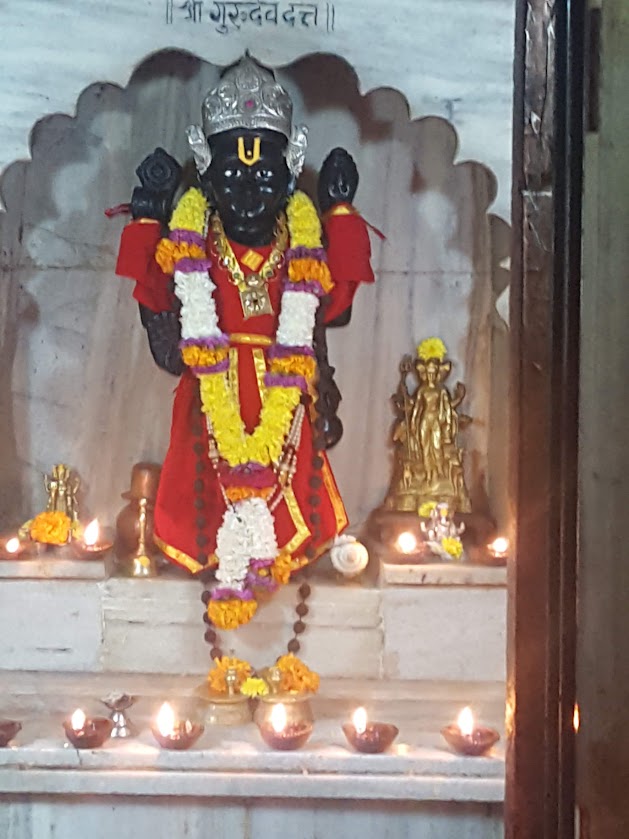
Come with your family and light a lamp at Datta's feet. Darshan timings and address are on the Darshan page. Shri Gurudev Datta!
Photos