Maniknagar (Humnabad), Karnataka
Location: Humnabad taluka, Bidar district | Connection: Shri Manik Prabhu – a saint revered as an avatar of Datta (1817–1865 CE)
In one saint's court, Hindus revered him as Dattatreya, Muslim devotees saw in him the form of a pir, Lingayat devotees regarded him as a form of Basavanna, and yet no one quarrelled with anyone. In the 19th century, at the confluence of two small rivers in Bidar district, such a town arose. Its name is Maniknagar, and the saint who founded it was Shri Manik Prabhu. All his life he lived out the message of the Datta principle: "all paths lead to the one Supreme Self."
The story
Born on Datta Jayanti
Shri Manik Prabhu was born in 1817 CE in the village of Ladwanti, near Basavakalyan. His father's name was Manohar Naik and his mother's was Bayadevi. According to tradition he was born on Datta Jayanti (Margashirsha Purnima), and so devotees regard him as an avatar of Shri Dattatreya. Even today in Maniknagar, Datta Jayanti is celebrated as Prabhu Jayanti.
From childhood he was detached from the world. His mind did not settle at home. He would wander in forests and wild places and sit in solitude, and devotees say that stories of miracles happened around him. Gradually crowds of devotees began to gather around him. Devotees began to lovingly call him "Prabhu" (Lord).
A town grows at the confluence
Wandering from place to place, around 1845 CE, Manik Prabhu came and settled at the confluence of two rivers, the Guruganga and the Viraja. At that time there was hardly any settlement there. But where Prabhu sat, devotees began to come; an ashram rose, annadan (free distribution of food) began, and the strains of bhajans echoed. That settlement later came to be named Maniknagar after him.
No one asked about the caste, religion or sect of those who came to his court. For Hindu devotees he was an avatar of Datta. According to tradition, Muslim devotees saw in him the form of Mehboob Subhani, Lingayat devotees regarded him as a form of Basavanna, and some Sikh devotees had the darshan of Guru Nanak in him. Each one felt, "He is our very own." And Prabhu accepted everyone with the same love.
"The whole earth belongs to my Lord Datta"
Manik Prabhu's fame reached the Nizam's court in Hyderabad. According to tradition, the Nizam sent one of his courtiers to him and offered a jagir (land grant) to meet the ashram's expenses. For a math (monastery) to receive land from a ruler was a great honour in those days. But Prabhu humbly declined the jagir and said, "The whole earth belongs to my Lord Datta. Why would I need separate land?" From this answer devotees understood that one whose support is God has no need of royal patronage. Even so, the annachhatra (free kitchen) of Maniknagar never stopped. The faith that "Datta is the giver" was his treasury.
The Sakalamata Sampradaya
Prabhu named his teaching the "Sakalamata Sampradaya". "Sakalamata" means all faiths. His philosophy was based on Advaita Vedanta: the Supreme Self is one, and all religions and sects are different paths leading to it. Therefore one should not hate any path. He did not merely preach this teaching; he lived it out every day in his court. The sampradaya speaks of three levels of worship: adhyatmik (the path of Self-knowledge), adhidaivik (worship of a deity) and adhibhautik (social service, annadan). That is, meditation, worship and service all hold an equal place in Prabhu's tradition.
Sanjeevan samadhi
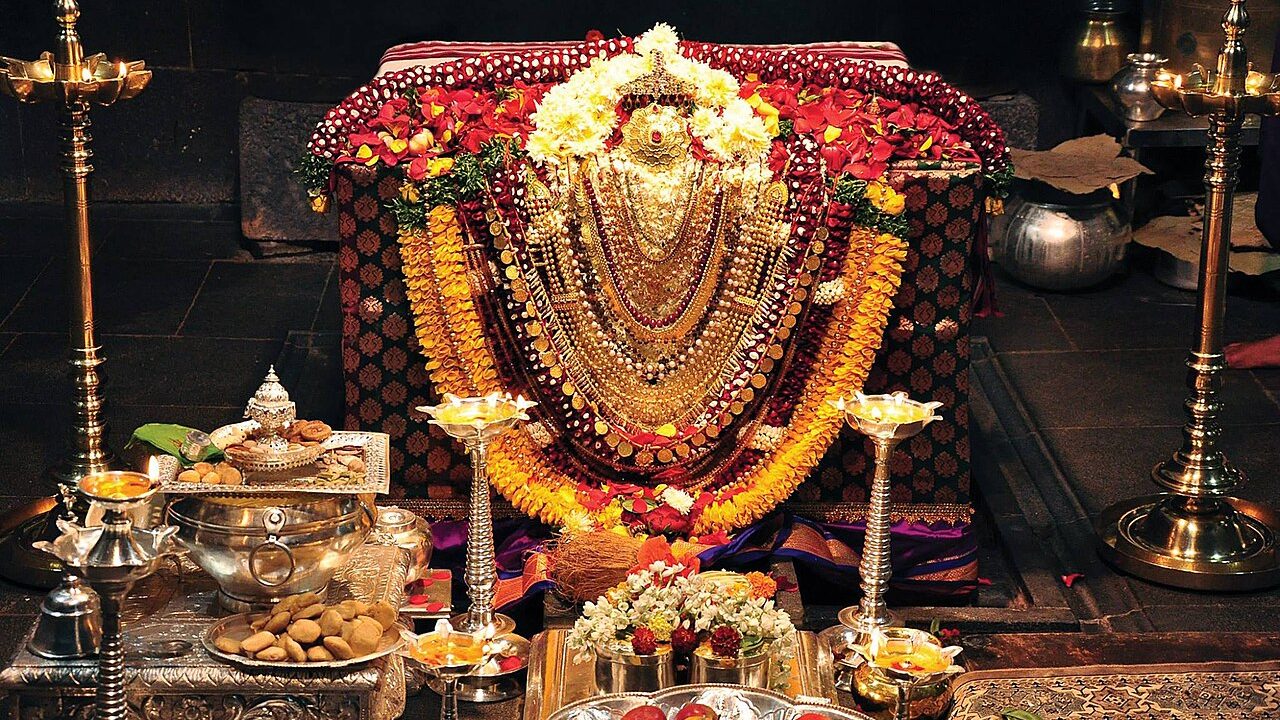
In 1865 CE, on Margashirsha Shuddha Ekadashi (Gita Jayanti), Manik Prabhu took sanjeevan samadhi (entering samadhi while alive) at Maniknagar. That is, just four days before Datta Jayanti. Devotees believe that Prabhu is alive in the samadhi even today and responds to the devotee who calls out to him.
History
After Prabhu's samadhi, his tradition continued through the peethadhipatis (pontiffs of the seat). The first successor was Manohar Manik Prabhu, followed by Martand Manik Prabhu, Shankar Manik Prabhu, Siddharaj Manik Prabhu, and the present peethadhipati is Dnyanraj Manik Prabhu. The sansthan (trust) expanded greatly in Martand Manik Prabhu's time. Today Maniknagar has the samadhi temple, annadan, a Veda pathshala (school of Vedic learning), and an ongoing tradition of music and bhajan.
Did you know? Music has a special place in Manik Prabhu's tradition. Prabhu himself composed many padas (devotional songs), and in the court of Maniknagar, concerts of classical music and bhajan are considered part of worship itself.
Significance
- A centre of equal respect for all religions within the Datta sampradaya.
- Datta Jayanti and Prabhu Jayanti fall on the same day, which makes this a special kshetra for Datta devotees.
- Manik Prabhu's tradition continues today through the peethadhipatis. Music, bhajan and annadan are the hallmarks of this place.
- Ganagapur, Bidar and Maniknagar form a compact pilgrimage route for Datta devotees.
Festivals
Maniknagar's biggest celebration is the Datta Jayanti festival of about seven days. It includes:
- Margashirsha Shuddha Ekadashi: Prabhu's punyatithi (samadhi day).
- Dwadashi: a river bath at the confluence.
- Dakshina Darbar and Guru Pujan.
- Margashirsha Purnima: Datta Jayanti and Prabhu Jayanti, the main day.
- The night-long Prabhu Darbar, with bhajan, music and darshan.
During these days thousands of devotees come from Karnataka, Maharashtra and Telangana, and annadan is offered to everyone.
Stories and lessons
| Story | Lesson |
|---|---|
| Hindus, Muslims, Lingayats and Jains all came to Manik Prabhu's court with equal respect | God is one, the paths are many. Cross the walls of religion and sect and see a human being as a human being. |
| He founded the "Sakalamata Sampradaya" | All-inclusiveness is the mark of the Datta principle. Datta is the Trimurti, which means unity in diversity. |
| He founded a town on the bank of the confluence and began the tradition of annadan, music and bhajan | Practise devotion joyfully and share it. Annadan and namasankirtan (singing the divine name together) bind society together. |
| He declined the jagir saying, "The whole earth belongs to my Lord Datta" | One who trusts in God has no need of royal patronage. |
Darshan information
Maniknagar is near the town of Humnabad, in Bidar district. The samadhi temple is open for darshan all day, and the tradition of annadan continues. There are large crowds in the week of Datta Jayanti, so devotees going at that time should arrange accommodation in advance. Both Gurucharitra places, Ganagapur and Bidar, are close by from here.
Places to see
- Shri Manik Prabhu samadhi temple
- Guruganga–Viraja confluence
- Nearby Bidar and Ganagapur