
Bidar, Karnataka
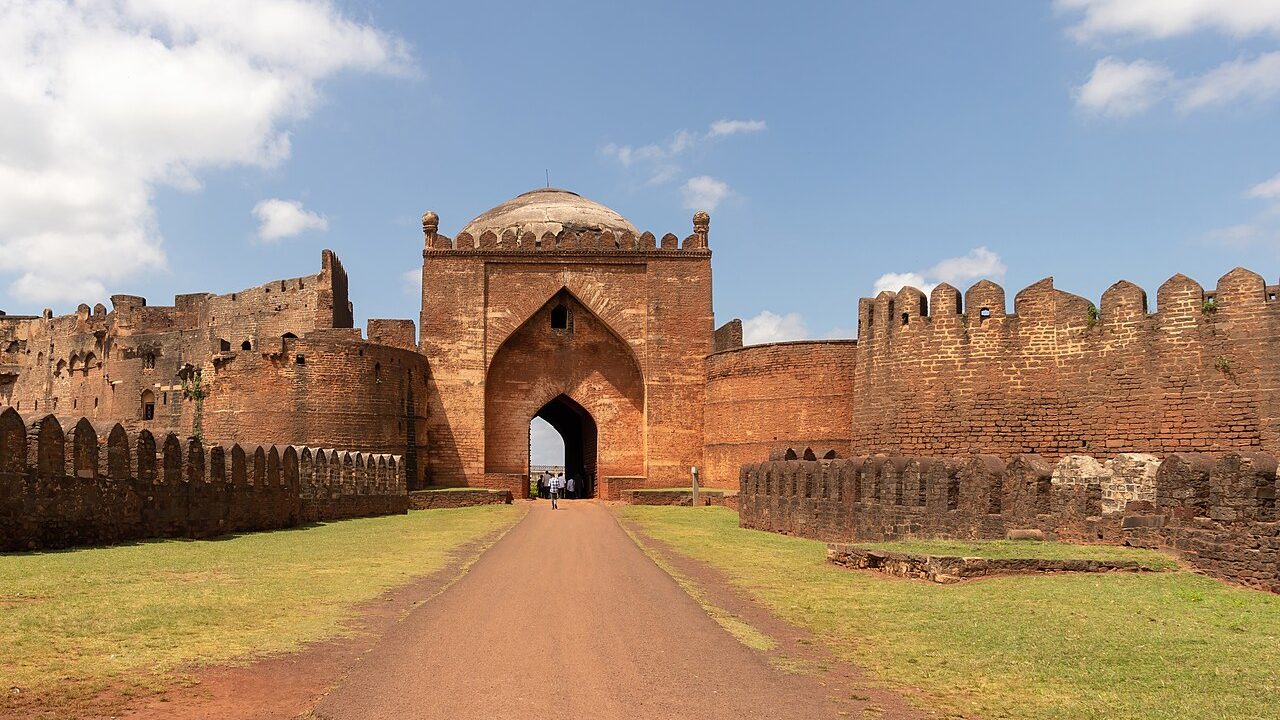
Location: Bidar district, Karnataka | Connection: From washerman to king – a story of two births (Ch. 9, 25, 50)
Can a wish that flickers in someone's mind for a single moment come true in the next birth? And can the Guru who recognised that wish come again in his next avatar and meet his devotee once more? The Bidar story in the Shri Gurucharitra answers exactly these questions. The scripture says that a simple washerman washing clothes on the ghat of the Krishna and the king seated on the throne of Bidar were one and the same soul. It is a story that links two avatars of Lord Datta: Shripad Shrivallabh and Shri Nrusinha Saraswati.
The story
The previous birth: the washerman of Kuravapur (Ch. 9)
Shripad Shrivallabh lived at the holy place of Kuravapur, an island-like spot in the Krishna river. Every day he went to bathe in the Krishna. On that same ghat a rajaka (washerman) worked washing clothes. He was simple and innocent, but deeply devoted. Whenever he saw Shripad he would prostrate fully before him, sweep clean the path he walked on, and serve him with all his heart. He never asked for anything. Service itself was his contentment.
One day a Yavana king came along the river on a pleasure cruise with his queens, servants and retinue. The boats were decorated, music was playing, and a crowd of attendants surrounded the king. Standing with a heap of wet clothes before him, the washerman saw that splendour, and a thought rose naturally in his mind: "How happy this king is! And my whole life is passing in washing clothes."
Through his inner knowledge Shripad recognised this thought. He called the washerman and asked, "A desire for royal comforts has come into your mind, hasn't it?" The washerman felt ashamed, but he told the truth: "Yes, Swami, for a moment such a thought did come." Shripad said, "If a desire in the mind is left unfulfilled, it later becomes a bondage. It must be fulfilled. You have grown old now. In your next birth you will be born in a Yavana family and become a king."
The washerman was frightened. "Swami, amid royal splendour I will forget you. Let me have your darshan in that birth too." Shripad gave him his word: "When you become king, I will meet you again and uplift you." Carrying this promise in his heart, the washerman passed on with the stream of time.
The arrogant Brahmins (Ch. 25–27)
Time went by. Two Brahmins proud of their learning came to the court of the Yavana king of Bidar. They were expert in Vedic recitation, but along with learning had come enormous arrogance. Travelling from town to town, they challenged scholars to debate and took from them a jayapatra (certificate of victory) stating "we have lost". The king was fond of hearing scholars debate. He honoured them and gave them permission to take such certificates from the pandits of his kingdom. Out of fear of the king, many simple Brahmins wrote out the certificates without even debating.
Wandering on, they reached the sannyasi Trivikram Bharati in the village of Kumasi. "Debate with us, or give us a certificate of victory. We carry the king's licence." Trivikram Bharati calmly replied, "My Guru is in Ganagapur. Come, let us put the question before him." In Ganagapur, Shri Guru explained things to them lovingly and described the boundless expanse of the Vedas (Ch. 26). But they would not listen. Then Shri Guru called a Matang man who was passing along the road and drew seven lines with his staff. With each line, the memory of the man's past births awakened, and he began to recite Vedic mantras in pure intonation (Ch. 27). The Brahmins were left speechless. They begged forgiveness, but Shri Guru told them that, as the fruit of their deeds against those they had insulted, they would have to undergo the state of a brahmarakshasa (a Brahmin turned demon-spirit), and once that was endured, they would be liberated. The arrogance that set out from the court of Bidar came to its end in Ganagapur.
The king's affliction removed (Ch. 50)
Now comes the last and most touching part of the story. That same washerman of Kuravapur had, in this birth, become the King (Badshah) of Bidar. He was valiant and glorious, but a large sphotaka (abscess, boil) had formed on his thigh. Royal physicians, hakims and many medicines had been tried, yet the pain would not lessen. The king seated on the throne was in anguish within. Because of the merit of his past life, he had respect in his heart for saints and holy men.
At last the learned Brahmins of the court said, "Jahanpanah, where medicine fails, merit works. Go on a pilgrimage." The king went to the Papavinashi tirtha. There he met a sannyasi, who told him a story about the fruit of serving saints and said, "O king, at Ganagapur, on the Bhima–Amarja sangam, there is a great sannyasi. By his darshan your suffering will go away." The king set out for Ganagapur with his retinue. On reaching the village he got down from his palanquin, left the royal pomp behind, and humbly walked on foot towards the sangam. The moment he saw Shri Guru, he bowed from a distance.
Shri Guru looked at him, smiled and said, "Washerman, where were you all this time? We are meeting after a long while."
On hearing these words the king stopped short. In that very instant he remembered his previous birth: the ghat at Kuravapur, his service to Shripad, the king's splendour on the river and the boon he had received. He ran and fell at Shri Guru's feet. "Swami, I am that same washerman of yours! By your boon I became a king, but in my splendour I forgot you."
Shri Guru said, "Show me your thigh." The king showed the abscess. Shri Guru looked at it with a gracious glance, and before their eyes the boil vanished. Pain of years ended in a moment. The king's eyes filled with tears.
The king insisted, "Swami, come at least once to my capital, to Bidar." Shri Guru first considered that people would find it strange for a sannyasi to go to the capital of a Yavana king, but out of his devotee's heartfelt love he agreed. The king respectfully seated him in a palanquin and himself walked on foot alongside it, taking him in procession all the way to Bidar. The whole city had been decorated. He was honoured in the palace, and the king offered all his wealth at his feet. Shri Guru advised him, "Rule your subjects according to dharma, do not harm cows, Brahmins and good people, and remember that royal splendour is impermanent." Then he took leave of the king and returned to Ganagapur.
On returning, Shri Guru said to his disciples, "Now even this Yavana king has started coming here. From now on the crowds will grow. We are now thinking of going into concealment." In the next chapter (Ch. 51) he set out for Shrishaila and disappeared into the Kardali forest. Siddhamuni tells Namdharak, "The promise Shripad gave at Kuravapur, Shri Guru fulfilled in his next avatar. The word of Lord Datta does not prove false even across births."
History
Bidar is a city on the Deccan plateau, at the north-eastern tip of Karnataka, near the borders of Telangana and Maharashtra. In the 15th century the Bahmani Sultans moved their capital from Gulbarga to Bidar. After that, Bidar's grand fort, palaces and madrasas were built. The "King of Bidar" in the Shri Gurucharitra refers to the royal power of this very region. The scripture does not give the king's name. Some scholars link him to a particular sultan, but that identification is not certain. So the devotional tradition knows him simply as "the King of Bidar".
Did you know? The court of Bidar appears twice in the Shri Gurucharitra: once at the start of the Karma Kanda (Ch. 25) and once at the end of the book (Ch. 50). The same court is connected both with the defeat of arrogance and with the victory of devotion.
Significance
- Shripad's boon bore fruit in the next birth: this is a story that links two avatars. It is regarded as testimony that Shripad Shrivallabh and Shri Nrusinha Saraswati are one and the same Datta principle.
- A Yavana king became a devotee of Shri Guru. It is an example that the Guru's grace lies beyond religion and caste.
- After this event his fame grew greatly, and only after that did Shri Guru decide to go into concealment (Ch. 51).
- Many devotees read Chapter 50 with faith for relief from incurable bodily ailments.
Festivals
Bidar is known not for a large Datta temple but as a place in the stories of the Gurucharitra. The days connected with this story are Guru Dwadashi (Ashwin Vadya Dwadashi, when Shripad went into concealment at Kuravapur) and Guru Pratipada (Magh Vadya Pratipada, Shri Guru's departure for Shrishaila). On these days, reading Chapters 9 and 50–51 is considered especially meritorious. At nearby Maniknagar and Ganagapur, Datta Jayanti is celebrated with great enthusiasm.
Stories and lessons
| Story | Lesson |
|---|---|
| The washerman's wish for royal comforts was fulfilled in his next birth (Ch. 9) | A desire held in the mind is surely fulfilled, but one has to be born again for it. So be careful with what you wish for. |
| The arrogant Brahmins who came with a licence from the court of Bidar were defeated in Ganagapur (Ch. 25) | Even with royal patronage, arrogance does not last. Learning is for humility, not for winning debates. |
| Despite his royal splendour the king was helpless before disease, and was cured by Shri Guru's darshan (Ch. 50) | Power and wealth are not a remedy for every sorrow. The Guru remembers the devotion a devotee had in a past birth. |
Darshan information
Devotees who come to Bidar usually make this pilgrimage together with Ganagapur (Kalaburagi district) and Maniknagar (Humnabad, Bidar district), since all three places are in the same region. If you make this journey keeping in mind the stretch from Ganagapur to Bidar, the route along which the king carried Shri Guru in a palanquin, the story comes alive.
Places to see
- Bidar Fort (the Bahmani capital)
- Jharani Narasimha cave temple (a Narasimha idol in a water-filled cave)
- Nearby Maniknagar (Humnabad) and Ganagapur