Kolhapur (Karveer), Maharashtra
Location: Kolhapur district, southern Maharashtra | Connection: Datta's place of alms
It is midday. In some lane of Kolhapur a sadhu comes to a door and says "Bhiksham dehi" (give alms). The housewife does not send him away empty-handed. Why? Because a faith has come down through generations in Kolhapur: "Who knows, it may be Datta himself at the door!" Devotees believe that in the city where Mahalakshmi herself lives, Dattatreya himself comes for alms every day at noon. This kshetra, where the goddess of prosperity and the Guru of renunciation meet every day, is Karveer, today's Kolhapur.
Story
Datta's place of alms
The saying "Bhiksha cha Kamalalaye" is current in the Datta Sampradaya. Kamalalaya means the seat of Lakshmi who dwells in the lotus, that is, Karveer (Kolhapur). It is believed that Dattatreya comes to Kolhapur every day at noon for bhiksha (alms), and that Mahalakshmi herself gives him the alms.
Folk tradition describes Datta's whole daily routine like this: a bath in the Ganga at Kashi at dawn, bhiksha at Kolhapur at noon, then a meal at Panchaleshwar on the banks of the Godavari, and sleep at Mahur at night. In this routine Kolhapur is the place of "giving". The god who holds all creation in his hands asks for alms, and the goddess who has all wealth gives it with joy. It is a beautiful picture of both the giving up of ego and the joy of giving.
That is why in Kolhapur it is still held that no sadhu or beggar who comes to the door should be turned away, because "who knows, it may be Datta himself".
The slow-witted Brahmin son of Karveer (Ch. 17)
The Shri Gurucharitra mentions the city of Karveer directly in a moving story. A learned Brahmin lived in Karveer. He had only one son, but the boy was slow-witted from birth. His father tried very hard, but the boy could not learn even one Vedic mantra. The father died in sorrow.
After that the son's suffering grew. People mocked him: "The son of such a scholar, and he does not know a single letter!" No one invited him for Brahmin duties. Unable to bear the humiliation, he left home.
Wandering on, he came to the temple of Goddess Bhuvaneshwari at Bhilwadi on the bank of the Krishna. "Mother, give me knowledge, or I will give up my life right here," he said, and began to fast. Three days passed, but nothing happened. In despair he said, "What use is a tongue that cannot recite the Vedas?" and cut off his tongue and offered it at the goddess's feet.
That night the goddess appeared to him in a dream. "Child, the one who will give you knowledge is someone else. Across the river, under the audumbar tree (cluster fig), Shri Nrusinha Saraswati is doing tapas. Take refuge in him." In the morning he crossed the river and came under the audumbar. With no tongue he could not speak, so he told his sorrow through his tears alone.
In compassion Shri Guru placed his hand on his head. At that touch his tongue was restored and the darkness over his mind vanished. In an instant he became a master of the Vedas, shastras, grammar, logic and Puranas. He became a single-minded devotee of Shri Guru, and when he returned to Karveer, those who had mocked him began to honour him.
Shri Guru's bhiksha (Ch. 22)
The spirit of Datta's bhiksha is seen in Shri Guru's life too. In Ganagapur he asked for alms every day at noon from a few houses. A poor Brahmin's house had nothing to give, only an old, barren buffalo. Shri Guru said, "Mother, give her milk as bhiksha." Trusting the Guru's word, the woman took a vessel, and the buffalo gave streams of milk. From that day the family's poverty ended. The saint who asks for alms sanctifies the home: this is the root of the Kolhapur faith. In the Datta Sampradaya many seekers still ask for madhukari: just as a bee takes a little honey from many flowers, a little bhiksha from a few houses. No burden on the giver and no ego in the receiver: such is this rule.
History
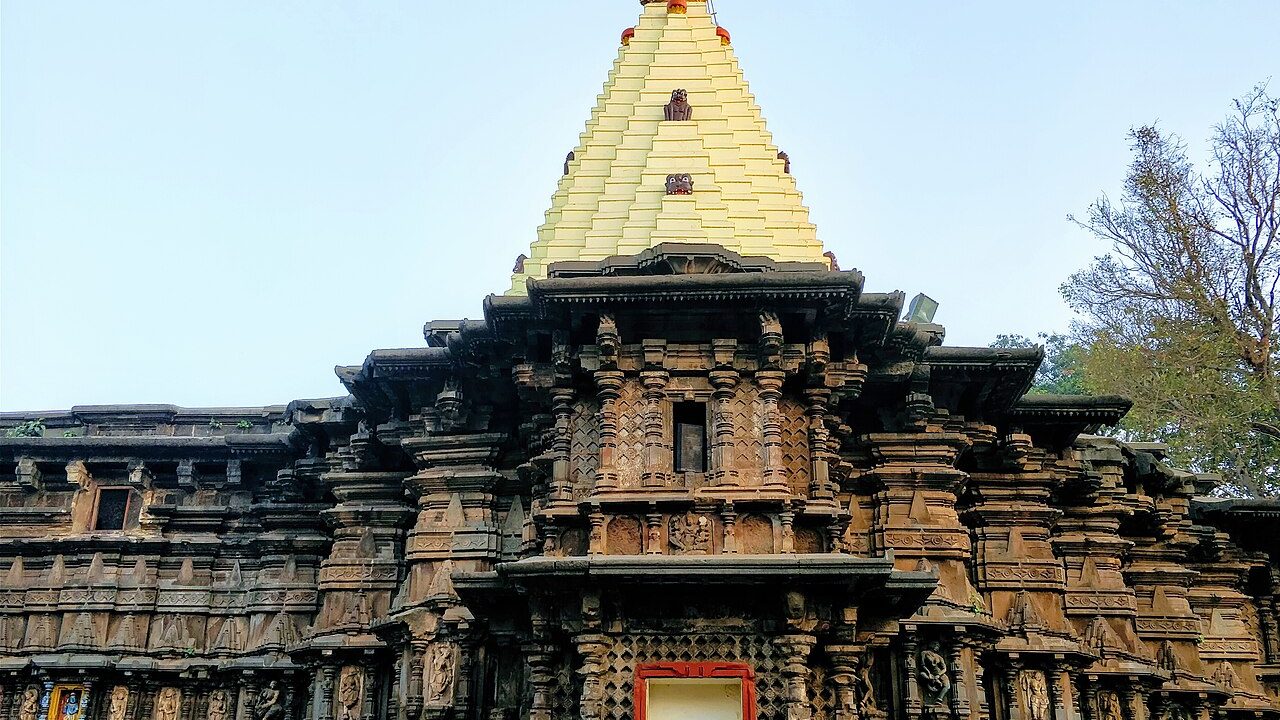
Kolhapur is an ancient city on the bank of the Panchganga river. The Puranas call it Karveer, and its goddess is known as Karveernivasini Mahalakshmi (Ambabai). The Mahalakshmi temple is an ancient temple of carved stone and one of the most important goddess shrines in Maharashtra. In Kolhapur district itself, at the Krishna–Panchganga sangam, lies Narsobawadi (Nrusinhawadi), where Shri Nrusinha Saraswati stayed for twelve years. So this whole area is a great region of Datta devotion.
Did you know? On certain days of the year in the Mahalakshmi temple, the rays of the setting sun reach right up to the goddess's idol. This event is called Kiranotsav.
Significance
- The kshetra of alms in Datta's daily routine.
- Shri Mahalakshmi (Ambabai) is one of the three and a half Shakti Peethas.
- Narsobawadi is close to Kolhapur, so this area is a great region of Datta devotion.
- The Gurucharitra story of the Brahmin son of Karveer (Ch. 17) links this city directly to Shri Guru.
Festivals
- Navratri (Ashwin): the biggest festival at the Mahalakshmi temple; each day the goddess is adorned in a different form.
- Kiranotsav: the festival of the sun's rays, held on certain days of the year.
- Datta Jayanti (Margashirsha Purnima): a big festival in the city's Datta temples and at nearby Narsobawadi.
Stories and lessons
| Story | Lesson |
|---|---|
| Dattatreya asks for alms in Kolhapur every day and Mahalakshmi herself serves the bhiksha | Even God asks for alms, which means giving up ego. It is a beautiful union of prosperity (Lakshmi) and renunciation (Datta). |
| The Kolhapur faith that "the beggar at the door may be Datta himself" | Never send anyone away empty-handed. The gift may be small, but keep the feeling behind it large. |
| Shri Guru too asked for madhukari (alms) in Ganagapur (Ch. 22) | The one who gives alms is blessed. Through bhiksha, saints sanctify homes. |
| The slow-witted boy of Karveer became wise at Shri Guru's touch (Ch. 17) | When the world scorns you, the Guru's grace lifts you up. Never look down on anyone. |
Darshan information
The Mahalakshmi temple is in the centre of the city and open for darshan all day. Navratri and holidays draw large crowds. From Kolhapur, Narsobawadi (about 50 km) and Bhilwadi–Audumbar, also kshetras of the Gurucharitra, can be visited on the same trip.
Places to see
- Shri Mahalakshmi (Ambabai) temple
- Datta temples in the city
- Narsobawadi nearby (about 50 km)