Significance of Ekmukhi Datta
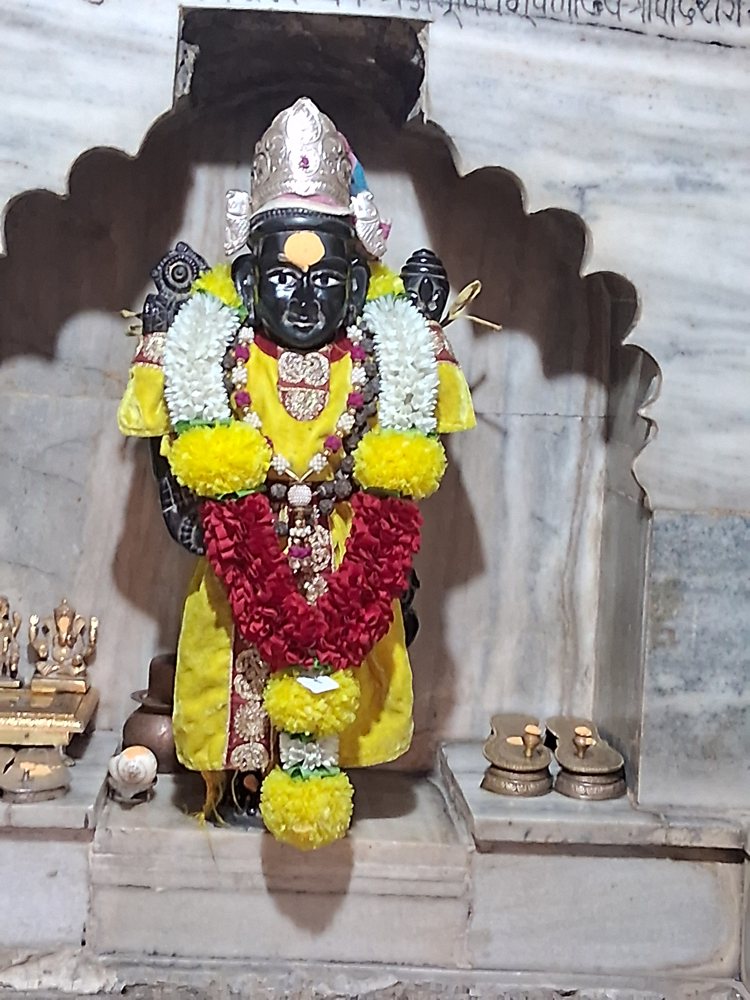
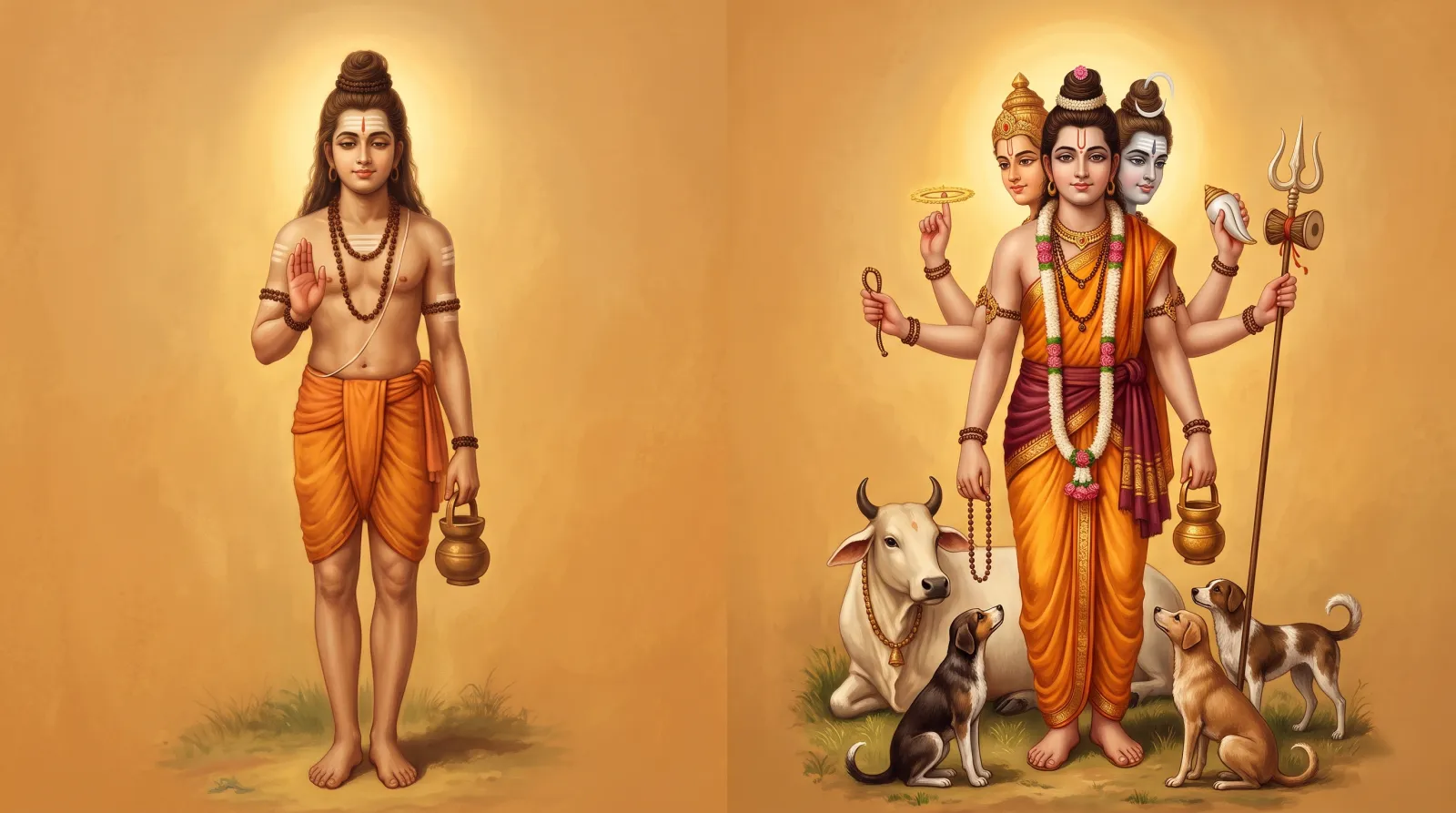
Most temples today show Lord Datta in the three-faced, six-armed form. But Datta's original, ancient form was single-faced (Ekmukhi). That is why the single-faced idol in Dange Galli, Ahilyanagar is considered rare and special.
History: the single-faced form is the older form
| Period / text | Form of Datta |
|---|---|
| Agni Purana (text on iconography) | Describes an idol with one face and two arms |
| Badami sculpture (10th–12th c., per Rigopoulos) | Single-faced |
| Changdev Raul (c. 1150–1220) | Worshipped single-faced Datta |
| Nath tradition temples (15th c.: Varanasi, Nepal, Himalayan foothills) | Single-faced |
| Dasopant (16th c.) | Worshipped a six-armed but single-faced form |
| After c. 1000–1200 CE | The three-faced form gradually became common |
| Gurucharitra (15th–16th c.) and Sant Eknath's aarti | Made the three-faced form popular |
Conclusion: the single-faced Datta is older than the three-faced form and the original iconography. It has become rare, so every place that still has one is a living link to the tradition.
Other single-faced Datta shrines
| Place | Note |
|---|---|
| Mahur (Datta Shikhar), Nanded | Regarded as Datta's birthplace; one of the old single-faced shrines |
| Narayanpur, Purandar (Pune) | Single-faced Datta and padukas; seat of Sadguru Narayan Maharaj |
| Pandharpur | Mentioned among old medieval single-faced Datta temples |
| Bhalod (Bharuch, Gujarat) and Rajghat (MP), Narmada banks | 12th-century single-faced idols; a Narmada tradition of Ekmukhi worship |
| Ahilyanagar, Dange Galli, Manik Chowk | Idol discovered through inner vision and consecrated by Rajaram Maharaj Dharmadhikari (c. 1800–1840) |
The spiritual meaning of "one face"
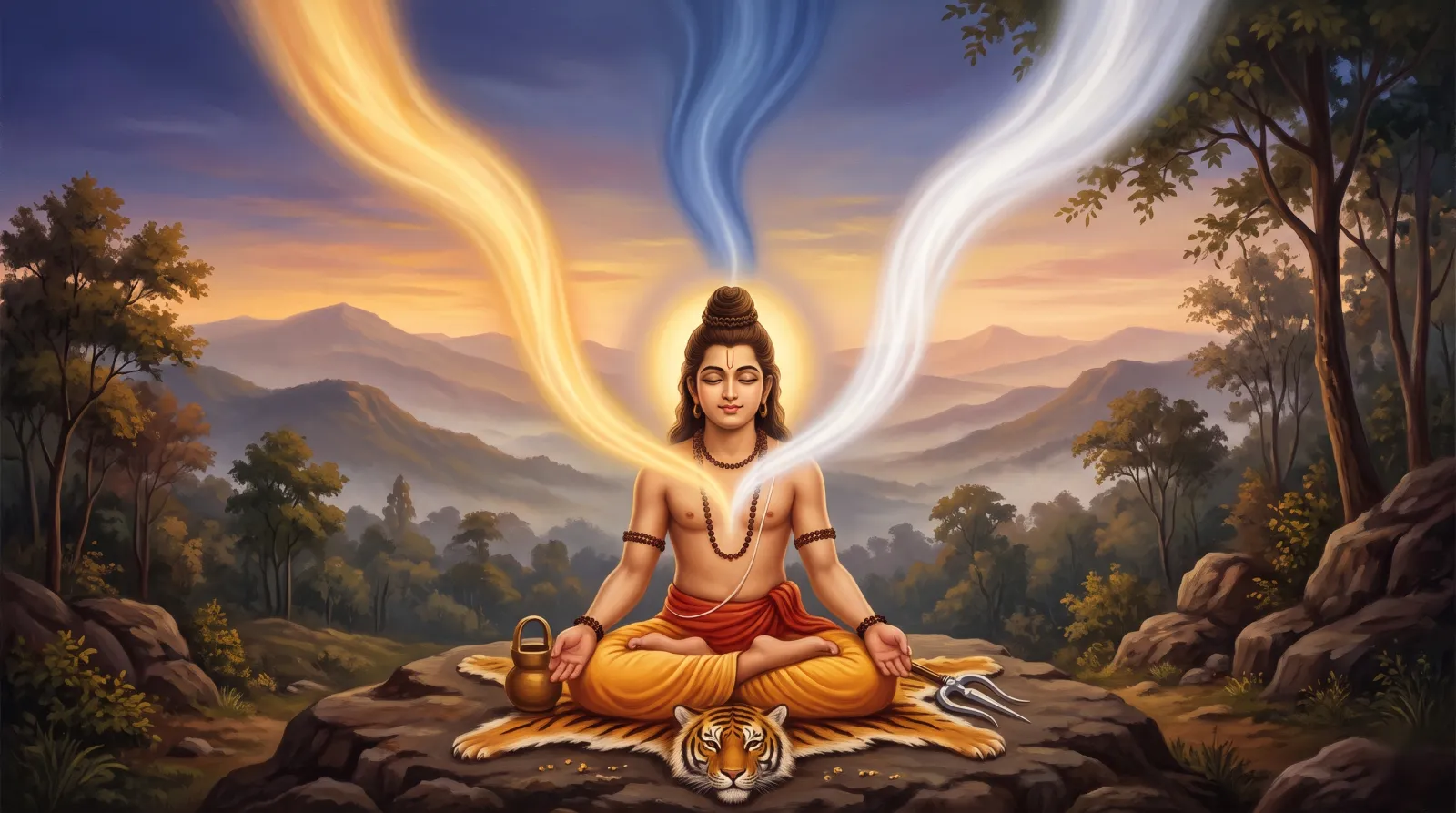
(A devotional interpretation based on the Datta tradition, not a scriptural definition.)
- The Trimurti in one principle: Brahma, Vishnu and Shiva are not three but one Supreme Brahman. The three faces show three functions (creation, preservation, dissolution); the single face shows them merged in their one source.
- Beyond the three gunas: the three faces stand for sattva, rajas and tamas. The single face is the state beyond all three gunas, the Avadhoot state.
- One-pointed devotion: meditating before a single-faced idol means making the mind ekmukhi, focused on one goal.
- One Guru-principle: Datta is the Adi Guru. Gurus may appear many, but the Guru-principle is one.
- Embodiment of knowledge: scholar Antonio Rigopoulos calls Datta essentially a jñāna-mūrti; the calm single face is a direct symbol of knowledge and detachment.
- Simplicity: a direct, face-to-face relationship between devotee and God.
Datta as Dhyana-murti, the Guru form
(A devotional way of looking at divine forms, not the Agamic classification of idols.)
Devotees come to God with different needs, and tradition says a different form of God comes forward for each.
| Form | Nature | Devotee's need | Examples |
|---|---|---|---|
| Ugra (fierce) forms | Blazing, protective | Rescue from an outer, immediate danger | Narasimha (protecting Prahlad) |
| Saumya (gentle) forms | Calm, gracious, often with family | Home, health, prosperity | Vishnu with Shridevi and Bhudevi, Lakshmi-Narayan |
| Dhyana-murti / Guru forms | Calm, inward, teaching | Self-knowledge, peace of mind, the answer to "who am I?" | Dattatreya, Dakshinamurti, Hayagriva |
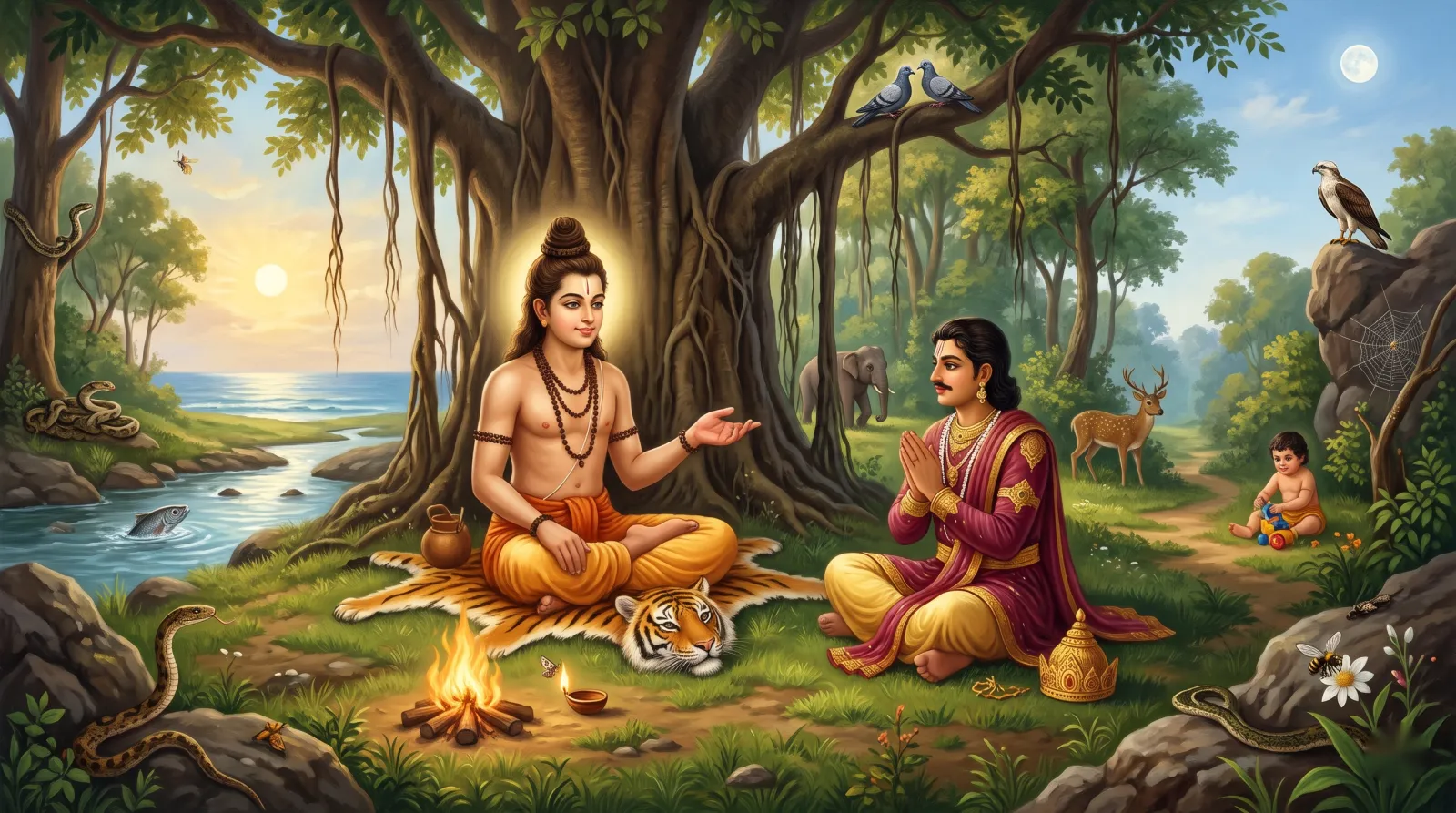
Many of Vishnu's avatars come to remove an outer danger. Matsya saves creation from the flood, Kurma bears the sinking Mandara mountain on his back, Narasimha bursts from a pillar for Prahlad. The Datta avatar is different. In the Puranas Datta fights no demon. He is seen teaching:
- the 24 gurus, from the earth to the wasp, to King Yadu (Shrimad Bhagavata, Book 11);
- yoga and detachment to King Alarka, grieving after losing his kingdom (Markandeya Purana);
- self-knowledge to Parashurama, mourning his mother, a teaching tradition knows as the Tripura Rahasya (Mahur). It explores the consciousness beyond the gross, subtle and causal bodies.
Datta is not among the famous ten avatars, but in the Shrimad Bhagavata's list of avatars (Book 1, chapter 3) he is the sixth: "shashtham atrer apatyatvam vritah prapto 'nasuyaya". There too his work is described in one line: teaching self-knowledge (anvikshiki) to Alarka, Prahlad and others.
Datta comes to remove the inner crisis: confusion, grief, ego, a restless mind. That is why he is called the Adi Guru.
A Guru does not advertise himself. Tradition says Datta sometimes appeared in strange, wild guise so that the merely curious would turn away. Only to those who stayed with true longing did he show his real form.
Remembering Datta for peace of mind: devotees believe that remembering Datta calms a restless mind. The first line of Tembe Swami's Karunatripadi is exactly this prayer: "Shant ho Shri Gurudatta, mama chitta shamavi ata" (Be calm, Shri Gurudatta, and calm my mind now).
The link to the single face: the three-faced form shows Datta's work (creation, preservation, dissolution). The calm single-faced form is the most direct image of the Dhyana-murti. To sit before it is to sit before the Guru and bring the mind to one point.
Why this matters for Ahilyanagar
- Rarity: Maharashtra has thousands of Datta temples, but only a handful of single-faced idols. This temple is one of them.
- A saint's idol: single-faced idols were mostly preserved by ascetic saints, and here too the idol was found and installed by Rajaram Maharaj.
- Samadhi and idol together: the saint's samadhi (1840) and the rare idol in one shrine.
- Heritage: a temple about 240 years old with carved teak pillars about 200 years old.